Monday, January 20, 2020

Intriguing bios for soccer enthusiasts


Soccer personalities have some of the most exciting stories to tell, which is why soccer biographies are some of the most intriguing pieces of literature out there, explains long-time fan Alexander Sabadash. Not only is soccer the greatest game in the world, but it’s also a universe on its own, with little galaxies in each country, from Russia and England to Spain, Brazil, and Argentina, and so on. On that note, here are some of the best and most intriguing biographies and autobiographies written by global soccer personalities.
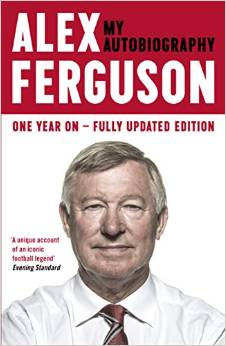


Image source: PasteMagazine.com
'Brave New World: Inside Pochettino’s Spurs' by Guillem Balague

Guillem Balague delivers one of the unique perspectives on the life of Tottenham Hotspurs’ Mauricio Pochettino. After coming on board in 2014, Pochettino led the Spurs to the top of the mountain. Fans, notes Alexander Sabadash, will surely appreciate a few, rare, transcribed dialogues between the legendary manager and the people close to him.

Image source: PasteMagazine.com
'My Autobiography' by Sir Alex Ferguson

Very few names are as revered in English football as that of Sir Alex Ferguson. His extremely successful run with Manchester United has seen him handle some of the greatest players of the past three decades. In “My Autobiography,” Ferguson expounds on the most important events in his life, and his thoughts on the personalities he’s coached and played with.

'Why Soccer Matters' by Pelé

Pelé, without a doubt, is the greatest soccer player in the history of the game. In fact, he has been cited by many sportswriters and historians as the greatest athlete, period. For this and many other reasons, his book is a must-read for soccer enthusiasts everywhere, adds Alexander Sabadash.

Wednesday, December 11, 2019

Soccer conditioning: Weak leg focus.


Players also practice trapping and catching balls extensively with their weak foot. Alexander Sabadash explains this increases the chance of gaining possession after the proverbial “first touch.” It also adds to a player’s control of the ball.

Image source: teachpe.com

Soccer players in top Russian, English, and Spanish leagues have reached that level by mastering the game, explains longtime fan Alexander Sabadash. Any player will testify that one of the most important things to overcome is the weak leg. Almost every player favors one leg over the other, but the best players can shoot, pass, and dribble with both legs just as well.
Training camps in the best soccer-playing countries have drills for players to overcome their weak leg’s shortcomings. First, players are forced to dribble and juggle with their weak foot as much as they can. Doing this helps players get used to controlling the ball with the weak leg, as well as they do with their favored leg.


Image source: myactivesg.com
Of course, players also practice kicking, passing, and shooting with their weak foot. These drills go beyond simply strengthening the leg. Passing and shooting for hours on end also increase the accuracy and control of the kick of players.

Combining all these training methods for years is the not-so-secret formula of the best soccer players in the world. And players who are serious about making it to the big leagues should follow these drills, adds Alexander Sabadash.

Friday, November 22, 2019

World football: A primer on the basic positions


Without a doubt, football (or soccer) is the biggest sport in the world. People of all ages everywhere, from Russia, England, and Spain to Brazil, the U.S., and even Japan all play this beautiful game.

For those who plan to take it up soon, longtime soccer fan Alexander Sabadash lists the basic positions in a team.

Image source: futeboldistritalsantarem.pt
Forward: Forwards are the players who attack the opposition’s defense. They go after the ball and attempt to score. The striker is the number one option for scoring, but other forwards move up as well to try and score a goal.


Midfield: Midfielders go up and down the pitch to defend or make plays for the forwards to score. Most of the time, the ball goes through the midfield in hopes for a break toward the opposing team’s goal. Alexander Sabadash notes that the best midfielders are great passers of the ball, and they can keep possession of the ball for a long time.


Image source: bizjournals.com
Defenders: As the designation suggests, defenders defend the team’s goal from the opposing team’s forwards. They make sure that, if the ball gets too close to their goal, they send it right back up the field. Alexander Sabadash explains that the last line of defense is the goalkeeper, who is the only person able to use his hands when the ball is in play.